


Introduction
Coatings play a key role in protecting pipeline systems. Pipelines move the fuels, water, chemicals, and industrial fluids that keep cities and industries running. Because of their underground structure, they are constantly exposed to harsh environments, which lead to corrosion, abrasion, rust, and more. This can weaken the structure, and repair can be costly.
Developing and constructing a pipeline system requires several years of planning, surveys, and studies, with consideration of various factors. So, pipeline coatings serve as a protective layer on the external and internal surfaces of the pipes. It ensures integrity and a longer lifespan, protecting against soil, water, mud, and other elements.
This article explores all about pipeline coatings–external and internal, how they work, and how they protect different corrosion types. Additionally, we’ll discuss the main pipe coatings and the manufacturing process for coated pipes. So, read till the end.
External Coatings vs. Internal Coatings
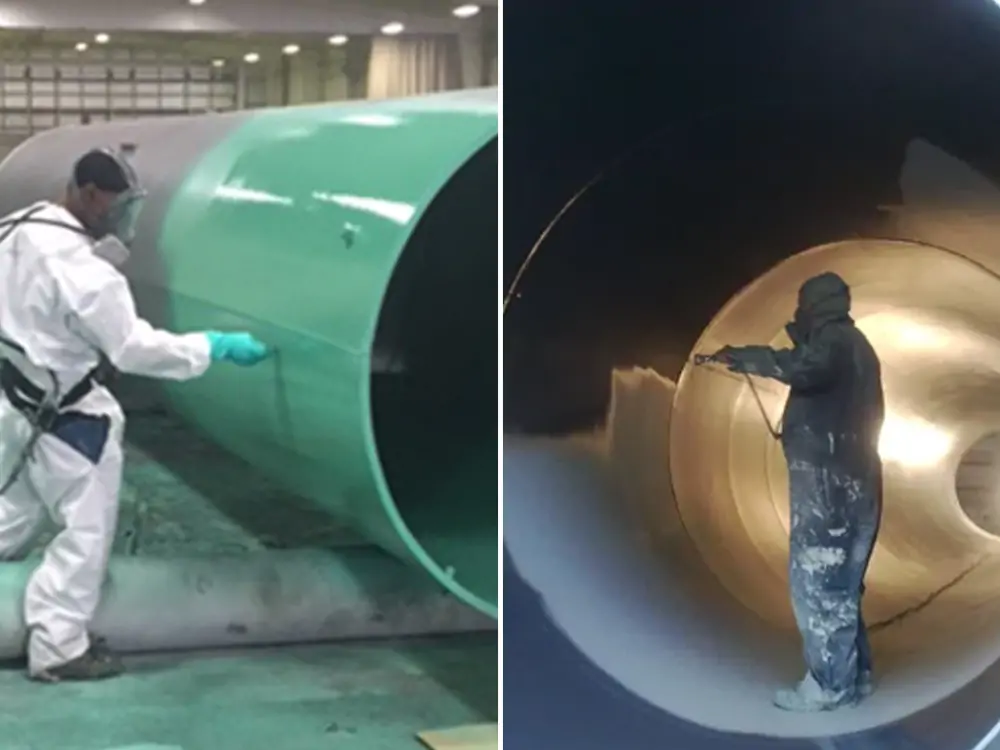
Pipeline coatings must be done on the internal and external surfaces of the pipes. Each one of them serves a different level of importance. Most of the oil and gas pipelines are coated with a barrier coating in combination with a cathodic protection (CP) system. They not only prevent pipe corrosion but also improve flow efficiency. Regulatory standards mandate this combination. Let’s take a look at how external and internal coatings differ and in what ways:
External coatings:
These coatings are applied to the external surface of the pipes and protect them from external threats such as soil, seawater, and mechanical damage. Soil, being corrosive in nature, may be in the form of mud or sand and can cause severe damage. Additionally, rocks, minerals, bacteria, and moisture also add to the damage. That is where external coatings, when applied with the CP system, prevent corrosion of the pipe and maintain structural integrity. It must be noted that, even if the primary layer degrades, the CP layer still protects the bare steel pipe.
Internal coatings:
Internal coatings are applied inside to protect the pipe from corrosion caused by the transported product. This includes CO₂, H₂S, water, or solids. That’s why, instead of solvent-based thin linings, solid corrosion-resistant coatings are usually applied. These linings form a dense, protective film that prevents wetting. They help block corrosion and reduce friction, allowing the fluid to move more easily.
Common Corrosion Types and Coating Protection Mechanisms
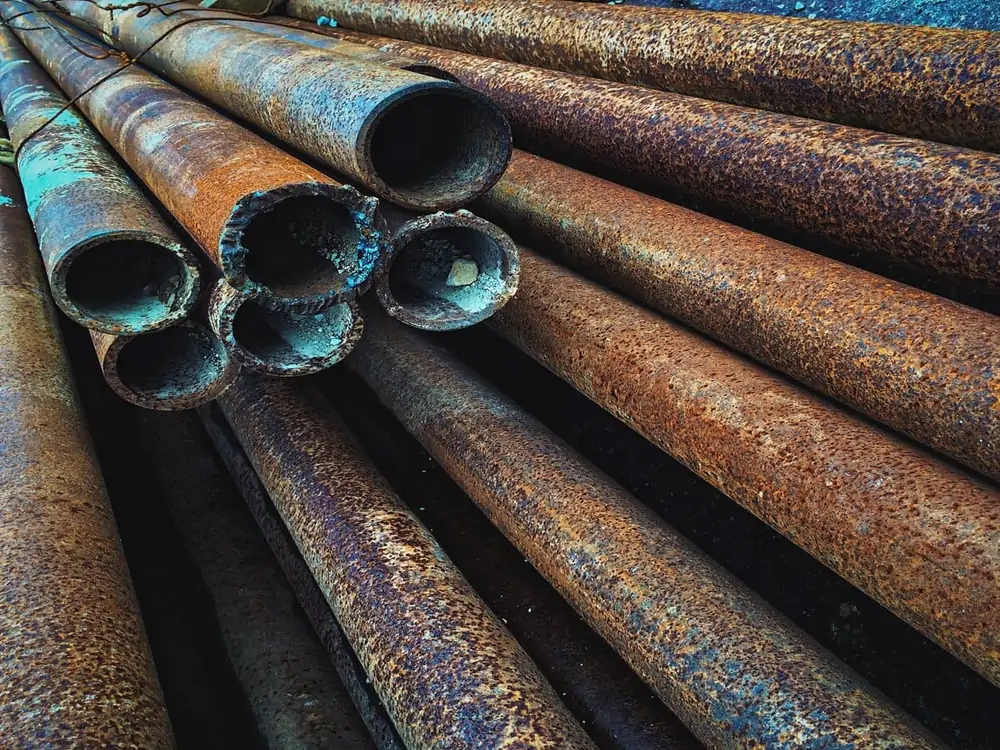
The key reason why pipelines fail is “corrosion”. They start small and grow in insulation, humid conditions, soil, or deposits. To deal with it, you need to understand the common types of corrosion and how coatings can address them. Here are some of them:
1) Uniform (general) corrosion
It is the most common type of corrosion that is caused by high moisture conditions. Also, it can happen when metals are exposed to excessive water, rain, oxygen, alkali, or acids. As a result, the material’s wall thickness loosens over time on the surface exposed. This leads to reduced load-bearing capacity and extends to the weakening of the entire material.
Here, the coating protects against corrosion by forming a layer. It separates the steel from oxygen, water, and ions. In short, less contact means less corrosion.
2) Pitting corrosion
A highly aggressive form of corrosion that forms due to chloride-containing settings, such as exposure to seawater. It breaks down the film, creating deep holes, seemingly small at the surface, but in fact can extend to narrow cavities, causing leakage.
Dense polymer coatings are great for such corrosion, as they slowly diffuse. If the coating resists damage, it also reduces pit initiation points. At the same time, a continuous and good edge coverage can do it well.
3) Crevice corrosion (under-deposit or shielded-area corrosion)
Crevice corrosion occurs due to oxygen depletion in confined, stagnant areas. These include under-deposit regions, bolts, lap joints, and gaskets. It spreads rapidly, weakening the joints and fasteners. That’s why it is challenging to deal with, as it creates aggressive conditions once started.
Coating helps seal narrow spaces, fill surface roughness, and close pathways. Low-permeability coatings reduce trapped moisture movement. At the same time, Proper joint coating and field-applied systems are critical for welded areas where crevice corrosion occurs.
4) Galvanic corrosion (dissimilar metal corrosion)
The leading cause of galvanic corrosion is the electrochemical reaction between two dissimilar metals coupled in an electrolyte. Here, one of the metals acts as a cathode and the other as an anode, while the less noble metal corrodes rapidly.
Use of sacrificial coatings can help prevent galvanic corrosion. It uses a metal like zinc, so the base metal is saved from corrosion. In short, the coating breaks the electrical path through the electrolyte. In buried lines, coating when combined with a cathodic protection system can work well. This is because the CP system can address minor defects.
Major Types of Pipe Coatings Available
Epoxies with Fusion Bonded (FBE)
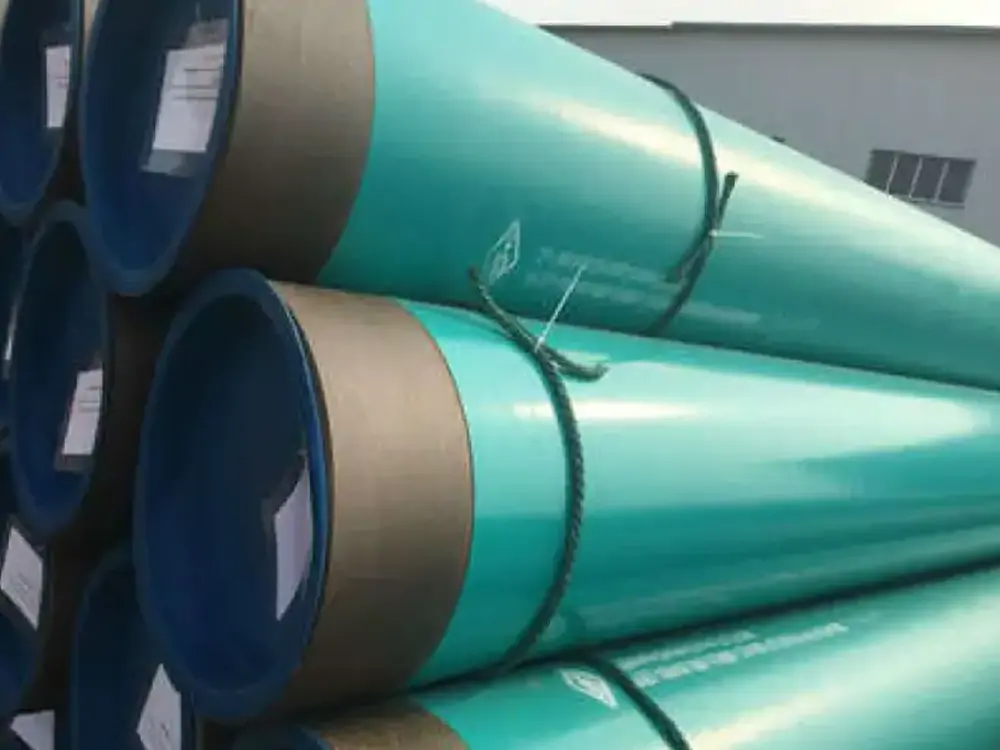
Fusion-bonded epoxies FBEs are thermoset epoxies and are used as external coatings for pipes. They are sprayed on hot steel. The powder melts, flows, and then cures, forming a hard protective layer. This layer can be up to 14-16 mils thick. It can withstand harsh underground and underwater conditions.
Key strengths include strong adhesion, chemical resistance, and temperature resistance. All these properties make them stand out for various applications, including chemical processing plants and oil and gas transportation.
3PE/3PP (Three-Layer Polyethylene/Polypropylene)
When it comes to impact resistance, 3PE/3PP coatings stand out. These coatings are 3-layer, which involves:
- 1st layer (primer): FBE coating. It functions as a corrosion-resistant and adhesive layer
- 2nd layer (middle): copolymer adhesive layer. It serves as a middle layer, bonding the upper and lower layers.
- 3rd layer (top): polyethylene or polypropylene layer. It helps in impact resistance.
They combine the benefits of both FBE and polyethylene/polypropylene. As a result, the coating is highly impact-resistant and possesses superior temperature resistance. 3PE/3PP coatings are best for long buried pipelines in aggressive soil or in high-strength applications.
2PE/2PP (Two-Layer)
It is the same as the 3-layer system, except that one layer is eliminated. Mostly, it’s an adhesive plus a polyethylene or polypropylene layer. The top layer offers high impact resistance, and the base prevents corrosion. So, the combination performs well in buried pipeline applications.
However, the 2PE/2PP layer is a cost-effective option.
Coal Tar Enamel (CTE)
Used for decades, the Coal Tar Enamel (CTE) presents a long history in buried pipe applications. These coatings form a thermoset covering that is cured with resin and a hardener. After they are applied in multiple layers to hot steel pipes, they cure to form a hard, protective covering that resists outdoor elements.
Coal Tar Enamel (CTE) coatings are generally cost-effective. The curing of CTE takes a bit longer (5-7 days) because the coating can be up to 15-35 mils thick. While sometimes forced curing is done, taking 8 hours at high temperatures. These coatings are chemically resistant and can have longer lifespans, making them mostly used for repairs.
Polyurethane (PU)
Polyurethane (PU) coatings are common and can be used on above-ground pipelines and as internal coatings. As these coatings are strong, flexible, UV-resistant, and abrasion- and impact-resistant, they find application in various industries, such as construction and automotive. PU coatings cure quickly, enabling higher production rates.
Their drawbacks include temperature sensitivity in some variations and humidity conditions. These factors affect the coating’s quality.
Hot-Dip Galvanizing
Even if the pipe is durable and corrosion-resistant, galvanization plays a key role. Hot-dip galvanization involves immersing the pipe in molten zinc, which provides a protective coating. This method gives off better corrosion protection.
There are several advantages of Hot-dip galvanization. It is cost-effective, easy, and requires minimal pre-treatment. They are mainly applied to above-ground pipes and do not work well for buried pipes. That’s because the aggressive soil can consume zinc.
Coated Pipe Manufacturing Process
Manufacturing coated pipes is a lengthy process that involves several steps. If done correctly, the coating can last longer, providing better corrosion protection. However, incorrect conditions may not match long-life pipeline targets.
Steel Pipe Surface Pre-treatment: First, the steel pipe surface is cleaned and profiled. This initial step involves abrasive blasting, which helps ensure upper coats adhere well.
Coating Application: There are several methods for applying coatings to steel pipes. Different application techniques include spraying, immersion, electrostatic, and rolling. The type of coating, corrosion types, and condition decide which technique must be applied for long-term integrity and proper functionality. After coating, the pipes are cured.
Quality Inspection: Last but not least, inspection and quality control checks are conducted. This step involves using tools and holiday-detection techniques to identify holidays and assess uniform coating coverage.
Conclusion
Now that you have read the article, you may know how these coatings play a key role in protecting steel pipes from corrosion and extending their lifespan. These coatings must be applied to the external and internal surfaces of the pipe. This is because the external environment, sand, rocks, minerals, and water affect the outside surface of the pipe, but internal products being transported also corrode the pipe. This internal and external damage weakens the structural integrity and causes severe damage, resulting in costly repairs. So, choose the right pipeline coating depending on the corrosion type.
Choosing a Professional Coated Pipe Manufacturer—UNIASEN
If you are looking for a professional coated pipe manufacturer that can provide high-quality corrosion-resistant coating, UNIASEN is China’s leading manufacturer! With a range of coatings that can potentially boost structural integrity, hydraulic flow efficiency, and service life, we can well support your needs. Additionally, we offer customized coated pipe solutions for your specific business requirements. Contact us now and partner with a reliable coated pipe manufacturer to get the best services.