


The differences in welded pipe varieties are mainly due to their varying manufacturing processes. In the pipe manufacturing and welding landscape, two manufacturing methods excel– ERW and EFW, producing ERW pipes and EFW pipes, respectively.
The two methods may confuse you due to similar names and the electric welding involved in both manufacturing processes. However, they are different in many ways.
To select the right pipe for your engineering and structural projects, you must know how to differentiate ERW and EFW pipes, as they have different specifications. In this article, we will discuss two types of pipes and break down their differences. Armed with this information, you will be able to choose the best option between ERW and EFW pipes.
ERW vs EFW Comparison Table
| Aspect | ERW (Electric Resistance Welded) | EFW (Electric Fusion Welded) |
| Full form | Electric Resistance Welded. | Electric Fusion Welded (often described as electric-fusion/arc welded). |
| How the seam is welded | Strip/coil is formed into a tube, and the seam is heated and joined by electric resistance. Commonly, high-frequency resistance welding is used. | Plate (or coil) edges are joined using an electric arc. It melts/fuses the seam, forming a longitudinal weld. |
| Typical starting material | Usually made from a steel strip or coil that is cold-formed into a “round” or “circular” tube before welding. | Commonly made from a steel plate (pressure-vessel quality plate). It is rolled into shape before arc fusion welding. |
| Typical wall thickness use | SCH 5 to SCH 160 (depending upon the application). | SCH 10, SCH 40, SCH 80, etc. |
| Industry standards | ASTM A178 | ASTM A672 for high-pressure EFW pipes for moderate temperatures |
| Usual cost/lead-time (market tendency) | Often lower cost and faster to produce than EFW in many supply chains (varies by size, grade, testing, and market). | Often higher cost/longer lead times than ERW for comparable items (varies by specification and required inspection). |
Manufacturing process of ERW Pipe and EFW
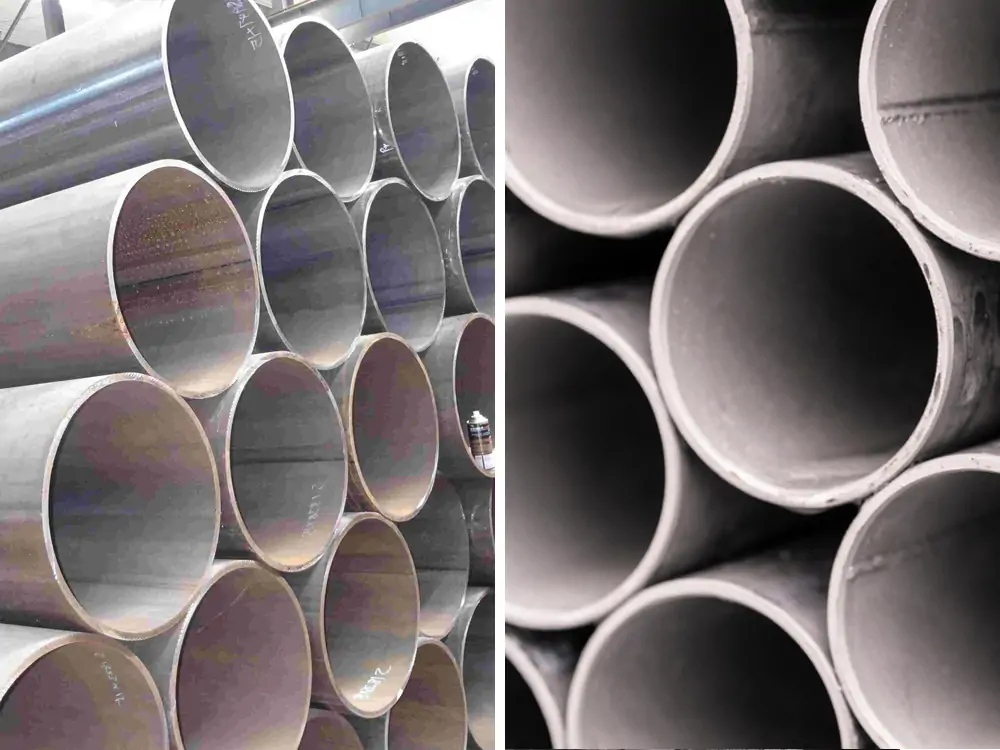
ERW pipe manufacturing process
In the ERW process, the metal sheets or coil strips are cold-formed. Giving them a cylindrical shape, these strips are now to be welded by ERW (Electric Resistance Welding). This involves heating the metal strip edges through a high-frequency (or low-frequency) electric current. Then, with the squeezing roller or dies, they are joined to form ERW pipes with longitudinal seams.
In modern applications, high-frequency electric resistance welding is preferred. It produces strong and durable seams without using filler material. Although low-frequency use is possible, several deformities can be observed, including inadequate seam bonding, hook cracks, and corrosion.
After welding, the external seams may be trimmed to make them undetectable. At the same time, the inner ones are left as they are.
EFW pipe manufacturing process
The EFW process, also referred to as arc welding or electron beam welding, uses an electric arc to melt or compress the metal edges. Then they are fused to form cylindrical EFW pipes with a longitudinal seam, as in ERW. Here, it does not need pressurization as the edges are molten and fuse uniformly. However, EFW may or may not use filler material.
ERW Pipe Specifications
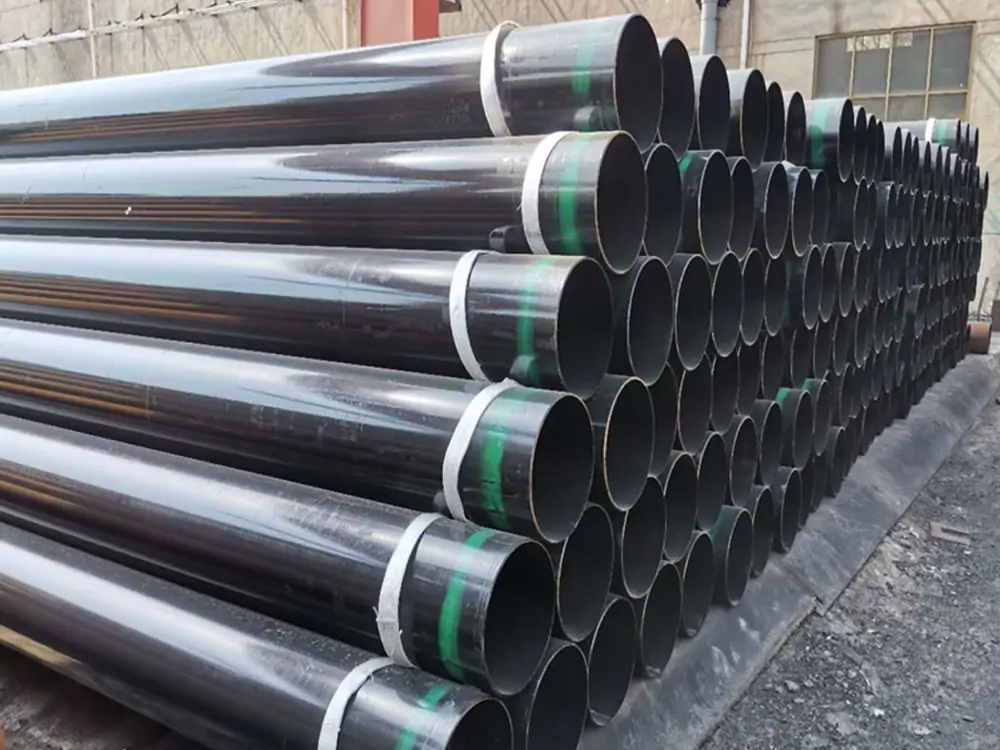
- Pipe size range: 1/2” to 48”
- Wall thickness (SCH): Available in SCH 5 to SCH 160 (depending upon the application).
- Material used in manufacturing: carbon steel and stainless steel
- Pipe End: Bevelled, threaded, or plain
- Industry standards: ASTM A178
Specifications of EFW Pipe
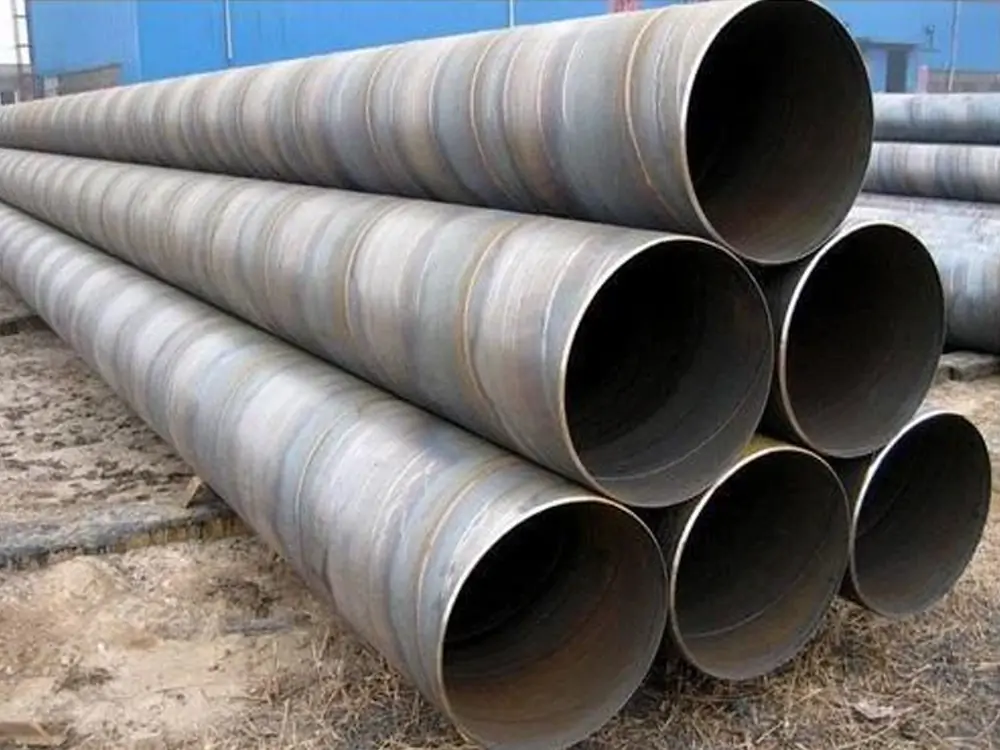
- Pipe size range: 1/8” to 100” (depending on ASTM specifications)
- Wall thickness (SCH): Available in SCH 10, 40, 80, etc.
- Material used in manufacturing: Stainless steel, carbon steel, and high-nickel alloy
- Pipe End: Bevelled, threaded, or plain
- Surface finishes: Matt polished, sandblasted, HF pickled
- Industry standards:
ASTM A672 for high-pressure EFW pipes for moderate temperatures
ASTM A691 for carbon steel and high-nickel alloy EFW pipes for high temperature
Advantages of ERW Pipe
ERW pipes include the following advantages:
- Cost-efficient
- Suitable for low-pressure applications
- The manufacturing process produces highly reliable and robust seams
Advantages of EFW Pipe
EFW pipes include the following advantages:
- They are thick-walled pipes with a large diameter
- High-strength pipes are suitable for demanding applications
- The electric arc welding process produces stronger seams
In what fields is the ERW Pipe used?
As a commonly used method of welded pipe manufacturing, ERW pipes are widely used in media transportation applications. Industrial applications span various sectors. These include HVAC, plumbing, oil and gas, power industry, aerospace, fire suppression, etc.
What are the applications of EFW Pipe?
EFW, being a cost-effective alternative to the welding pipe manufacturing method, produces pipes with high strength and corrosion resistance. EFW pipes are used in high-pressure applications that require tight tolerances. Applications involve industrial sectors such as chemical, food processing, and petrochemical.
Conclusion
Both ERW and EFW are welded pipes and are used in various industrial sectors. It is vital to understand the two most commonly used pipes to ensure proper selection for your project. Always choose the pipe after assessing your needs. Select according to specific application requirements. These include pressure, fluid being transported, temperature, and your budget.