
Introduction
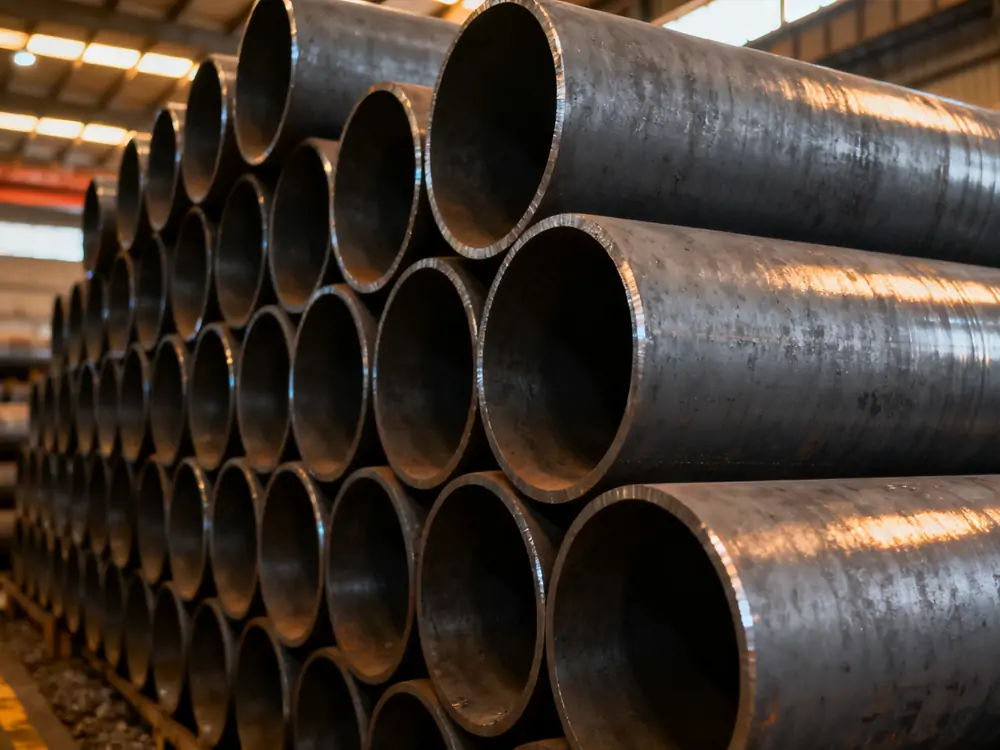
The standard specification for seamless carbon steel pipe is known as ASTM A106. The most common grade specified in the ASTM A106 standard is grade B. It is the most widely used amongst all grades (A, B, and C).
This material is used in those systems where consistent performance is required. This standard is widely used in industries where fluids and gases flow under pressure. These pipes withstand thermal stress and internal pressure. To transport natural gas and oil to terminals, these pipelines play an ideal role.
Carbon steel pipes convert raw carbohydrates into fuels and chemicals. They are used in fire protection systems.
There is a practical balance between ductility, strength, and expense in these pipes. Under demanding conditions such as high pressure and temperature, these carbon steel pipes play a significant role. So, power plants and boilers benefited from these pipes.
New installations and replacement projects use these pipes. Due to their wide availability in standard sizes, these pipes are easy to install.
Chemical Composition
ASTM A106 Grade B has strict control over its chemical composition. Due to this feature, these pipes perform uniformly. It also guarantees mechanical reliability.
- The range of silicon is 0.10-0.35%. It acts as a deoxidiser, enhancing the quality of steel.
- The maximum carbon content is 0.30%, which controls the hardness of these pipes.
- The manganese content range is 0.29 to 1.06%. It is used to enhance the toughness. It is also used to enhance wear resistance.
- 035% of phosphorus and 0.035% of sulphur are also present.
- Other present elements involve chromium (0.40%), copper (0.40%), and nickel (0.40%)
- However, the percentage of vanadium and molybdenum elements is 0.08 and 0.15, respectively.
The above balanced composition guarantees good weldability in these pipes.
Mechanical Properties
The standard ASTM A106 (grade B) is mechanically strong for use in industrial applications.
- The tensile strength of this material is greater than 415 MPa. And, this tensile strength is widely used in pressure systems.
- The minimum elongation of this standard is approximately 30%. Its good ductility enables these pipes to bend into the required shapes.
- However, its yield strength is limited to 240 MPa. So these pipes play a significant role in stressful services.
Dimensions
There are standard dimensions specified for ASTM A106 (grade B). Their standards are almost identical to ASME.
Pipe sizes typically range from 1/8 inch to 48 inches. Whereas the wall thickness is typically defined by a schedule like 10, 40, 80, etc. The length of these pipes is random, depending on the requirement.
ASTM A106 (grade B) is available in threaded and plain ends. They are also available in beveled ends.
Manufacturing Process
Grade B pipes of ASTM A106 standard are made by a seamless process. The uniform structure and strength are guaranteed features of these pipes.
One of the main production procedures for these pipes is hot rolling. The cold drawing production method is used for smaller sizes.
- The shape of steel is given by billet heating.
- The next step involves piercing, which is used to make a hollow tube.
- Sizing and rolling are the main steps in their manufacturing process.
- Then, it refines the pipe dimensions.
- Heat treatment enhances the mechanical properties of these pipes.
- The last step is testing these pipes to eliminate weld defects. These tests also involve flattening and bending tests. These tests are done to check the structural integrity of carbon steel pipes.
Material Specification
- ASTM A106 (grade B) is a well-known type of seamless carbon steel pipe. This standard is typically a part of ASTM A106/A106M.
- The design of these pipes enables them to be used in boilers. Because they handle challenging conditions like high temperatures up to 565°C.
- Grade B of this standard is used in critical systems to avoid leakage.
- Its chemical and mechanical properties help manufacturers. They can easily guess which elements make steel stronger.
- The testing and inspection criteria of this grade check the quality of the pipe.
Grades
There are three grades (A, B, and C) covered by the ASTM A106 standard.
- Grade A features include better ductility. But it has lower strength. So, low-pressure applications use this grade.
- Grade B is of medium strength. The reason for its widespread usage in industries is its balanced performance.
- The strength of grade C is higher than that of grades B and A. This grade performs well for high-pressure systems.
Features and Advantages
There are many industrial benefits of standard ASTM A106 (grade B):
- The major advantage of this material is its resistance to high temperatures. These pipes are designed to handle the conditions of steam generation and continuous operations.
- Grade B has strong mechanical properties. It requires low maintenance.
- Good formability enhances its performance in critical piping systems.
- The seamless structure of these pipes prevents leaks. These pipes have a long service life.
- Grade B is widely available and offers reliability in harsh environments.
What are the equivalent grades for ASTM A106B?
There are several equivalent grades for ASTM A106 Grade B under different standards. Their applications are almost similar.
- ASTM A53 (grade B) is a common equivalent grade for ASTM A106B
- There is another equivalent grade, API 5L (grade B)
- EN 10216-2 P265GH is an approximate equivalent grade for ASTM A106B.
- Another equivalent grade is DIN 17175 St45.8.
All the above grades have similar chemical and mechanical properties.