
Importing steel pipes into Australia isn’t a single-step process. Border officials can reject steel pipes if you don’t know the Australian rules and regulations. Therefore, you should be aware of and comply with all applicable Australian standards to facilitate entry into the Australian market.
One key method or certificate is the Mill Test Certificate. It introduces the verification tests and helps trace the origin of the product batches. Today, we will discuss how to verify MTC certificates and avoid compliance issues.
Why MTC Verification Is Important When Importing Steel Pipes to Australia
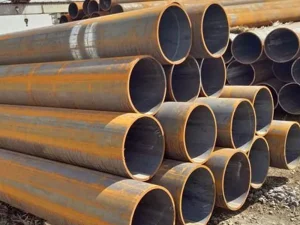
You may wonder why MTC is essential. Steel products labeled with the MTC mark aren’t automatically fully verified. A proper verification certificate is essential for importing steel.
There are a few more important verification areas, such as:
- Applicable Australian standard
- Calidad del acero
- Product dimensions
- Heat number
- Composición química
- Mechanical test results
- Impact test results where required
- Manufacturer information
- Laboratory information
- Product identification and traceability
What Happens in Case of Inadequate Documentation?
If you have insufficient documentation, a few issues may arise simultaneously. These include:
- Shipment or clearance delays
- Requests for additional documentation
- Third-party material testing
- Material quarantine
- Site rejection
- Project approval delays
- Additional costs
- Contractual disputes
What Information Should an MTC Contain?
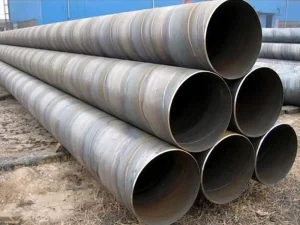
There are a few pieces of necessary information that a Mill Test Certificate should have:
|
MTC Item
|
What to Verify
|
| Manufacturer | Company name and production location |
| Estándar | Correct reference, such as AS/NZS 1163 |
| Calificación | Matches the purchase specification |
| Tamaño | Outside dimensions and wall thickness |
| Heat Number | Matches the product marking |
| Composición química | Actual test values |
| Fuerza de producción | Actual measured result |
| Resistencia a la tracción | Actual measured result |
| Alargamiento | Actual measured result |
| Prueba de impacto | Temperature and measured energy where applicable |
| Test Laboratory | Laboratory identification and accreditation |
| Certificate Number | Unique and traceable documentation |
| Product Marking | Corresponds with MTC information |
Seven Key Checks When Verifying an MTC
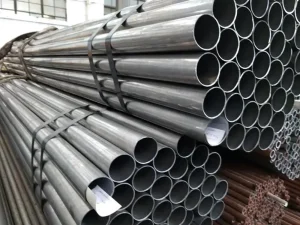
There are a few critical checkpoints for MTC certificate verification. Seven options are listed below.
Check the Applicable Standard
Check your products and confirm which standards apply. Also, confirm that the stated standards match the application.
The key options to check are:
- Check the standard number and edition.
- Confirm AS/NZS 1163 where required.
- Match the MTC with the purchase order.
- Check that the stated standard covers the product.
Confirm the Steel Grade
Steel grade defines the strength and impact resistance. Here is how you should confirm the steel grade.
- Confirm the exact grade designation.
- Check yield and tensile requirements.
- Verify elongation values
- Match the grade with project drawings.
Verify Heat Number Traceability
The heat number provides a layout of production batches and helps trace the origin. You should check and verify the heat number as follows:
- Check the heat number on the MTC.
- Compare it with pipe markings.
- Check bundle or packing records.
- Confirm traceability throughout the supply chain.
Check Chemical Composition
Steel combines different metals to enhance strength, corrosion resistance, and other properties. For these applications and tests, chemical composition verification is essential. It helps:
- Check carbon content
- Review manganese and silicon.
- Check relevant alloying elements.
- Compare values with standard limits.
Verify Mechanical Test Results
Mechanical tests help assess strength and other mechanical properties.
The reported values should match those already mentioned in the documentation.
- Check yield strength
- Check tensile strength
- Verify elongation
- Confirm test units and methods
Check Impact Test Information
If impact resistance is required, you should verify that impact test information is available in the details and description.
Go for:
- Check impact test temperature.
- Review absorbed energy values.
- Confirm specimen information
- Match results with project requirements
Verify Laboratory and Accreditation Information
Where have the products been tested? Comprehensive lab information is essential. You should:
- Check laboratory name and identification.
- Verify accreditation details
- Confirm the accreditation scope.
- Check applicable ILAC MRA recognition.
- Keep supporting laboratory records.
A Practical Pre-Shipment MTC Verification Process
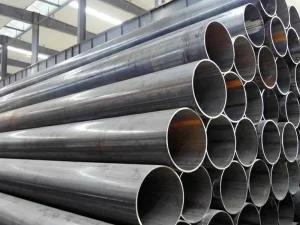
If you’re not familiar with the pre-shipment MTC verification process, we have evaluated the different steps in detail.
Step 1: Confirm Project Requirements
Each Australian project has different requirements. Start with the project requirements and verify them against the project at hand.
- Confirm applicable standards
- Confirm steel grades
- Check testing requirements
- Identify certification requirements
Step 2: Request Draft MTCs
Ask your manufacturers to provide a draft. A draft helps you evaluate issues early and improve the overall reliability of the verification process.
- Request sample or draft MTCs
- Check document format
- Review required test data.
- Identify missing information early.
Step 3: Check Technical Information
Check and compare the MTC data with the steel pipe’s technical information. Confirm that all the information matches accurately.
- Check grade
- Check dimensions
- Verify chemical composition
- Review mechanical properties
- Confirm testing requirements
Step 4: Verify Traceability
Verify and confirm product traceability. Confirm traceability.
- Verify heat numbers
- Check product markings
- Match bundle information
- Maintain batch records
Step 5: Verify Laboratory Documentation
Review the laboratory information supporting the reported lab results. Perform the following checks.
- Check laboratory identification
- Review accreditation details
- Confirm test scope
- Keep supporting reports
Step 6: Review ACRS Requirements
A few projects may require ACRS-certified steel pipes. In that case, review the ACRS requirements, work with ACRS-certified suppliers, and confirm the information is correct and verified by ACRS.
- Check ACRS status
- Confirm product scope
- Verify manufacturing site
- Match certification with the order
Step 7: Complete Final Inspection
Before you verify the MTC, go for the final inspection. Cross-check all the information and verify that it matches the requirements. Moreover, inspect the following aspects.
- Check pipe dimensions
- Verify markings
- Confirm quantities
- Review final MTCs
- Check packing information
Step 8: Prepare the Complete Document Package
Is all the documentation complete? Have you verified all the information? If everything is fine and all information has been confirmed, proceed to arrange the documentation and prepare a complete document package.
Do it as follows:
- Final MTCs
- Inspection reports
- Test reports
- ACRS documentation where applicable
- Packing and traceability records
- ITP and quality documents
How Uniasen Helps Reduce Steel Import Compliance Risks
UNIASEN reduces issues and improves product compliance. It offers a combined approach for product supply, production inspection, laboratory testing, certification verification, and documentation preparation.
It offers the following features and amenities to optimize shipments and secure customs clearance.
Production-Line Quality Control
Each steel structure undergoes rigorous quality control. The supply process can include:
- Production inspection
- Dimensional checks
- Material identification
- Batch traceability
- Quality documentation
CNAS Laboratory Support
CNAS is the international standard for testing. Where applicable, supporting test documentation can cover:
- Tensile testing
- Bend testing
- Impact testing
- Análisis químicos
- Other required material tests
ACRS Qualification Checking
For various projects that comply with Australian standards, ACRS certification is essential. UNIASEN is already ACRS-certified and delivers all steel structures that comply with the ACRS. The benefits are:
- Easy access to the Australian market
- Steel tender eligibility.
- Better results and clearance at the customs border.
Complete MTC and ITP Documentation
Instead of arranging documents, the buyer can request a comprehensive package including:
- MTC
- Laboratory reports
- ITP
- Inspection records
- Traceability documents
- Certification-related information
Preguntas frecuentes
- When should MTCs be verified for steel pipes imported to Australia?
Verify milling test certificates before production and shipment. This helps importers evaluate and correct missing information, resolve traceability issues, and arrange additional testing if needed.
- Is an MTC enough to prove that imported steel is compliant?
Not necessarily. An MTC is a verification process that may be essential for some projects. Different projects may require third-party certification, laboratory reports, inspection records, ITPs, ACRS certification, or other documentation.
- Are CNAS laboratory reports accepted for Australian steel projects?
CNAS laboratory reports are internationally recognized. However, for Australian projects, it may depend on applicable Australian standards, project specifications, certification requirements, and purchaser or engineer requirements.
- Why is heat-number traceability important for AS/NZS 1163 steel?
The heat number connects the steel to its manufacturing batch. Therefore, it is essential in several situations and helps trace its origin and manufacturing process.
- What should I check first on an MTC for steel pipes imported into Australia?
Start with the applicable standard, steel grade, heat number, dimensions, and manufacturer information. Then check the chemical composition and mechanical test results.
Conclusión
Importing steel into Australia requires careful verification. MTC confirms the origin and manufacturing batch of the given steel products. For AS/NZS 1163 steel pipes and hollow sections, buyers should focus on standard designation, steel grade, heat-number traceability, chemical composition, mechanical properties, impact testing where applicable, and laboratory information.
Need compliant AS/NZS 1163 steel pipe pricing and an MTC template? Contact UNIASEN. We deliver the MTC certificate with our steel products and help you comply with the Australian rules and regulations. Your products get easy entry at the customs border. Contact our expert right away!